


How do you make your brand more expressive without losing consistency?
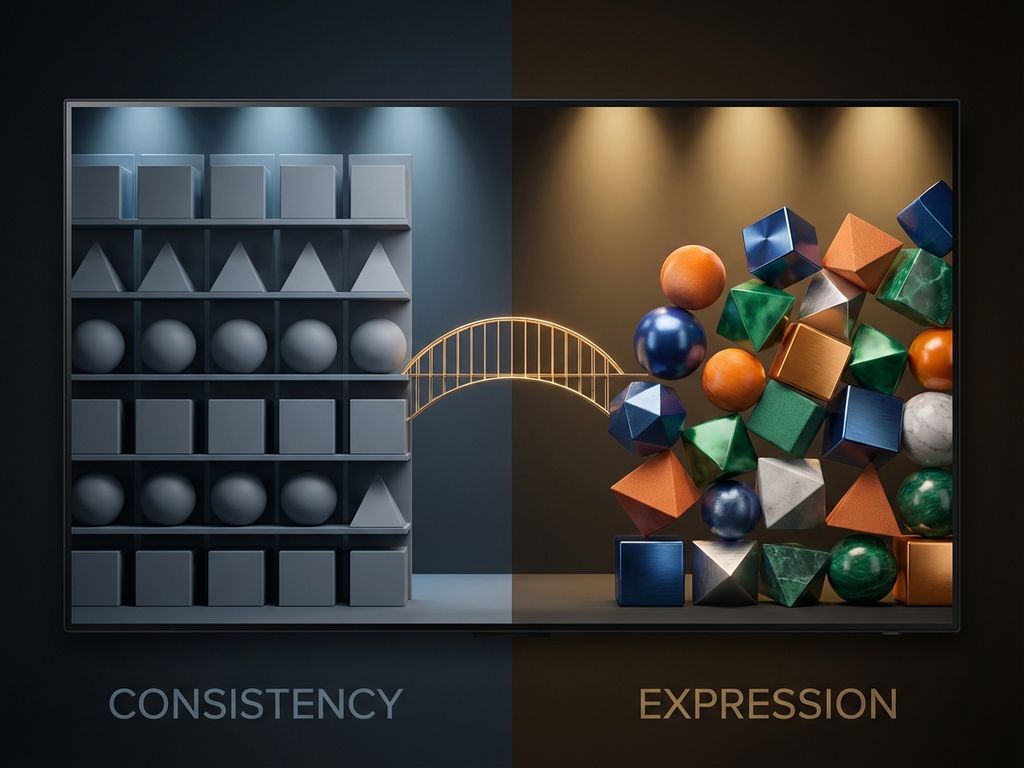
Making your brand more expressive while maintaining consistency requires building flexible brand systems that provide structure without stifling creativity. You achieve this through modular brand guidelines, clear tone-of-voice frameworks, and defined flexibility zones that allow adaptation across channels while protecting core brand elements. This approach enables authentic brand expression that strengthens recognition rather than diluting it.
What does it mean to make your brand more expressive?
Brand expression goes far beyond your logo and colour palette. It’s how your brand behaves, communicates, and connects emotionally with people across every touchpoint. While basic brand identity covers visual elements, expression encompasses your tone of voice, personality traits, storytelling approach, and the authentic behaviours that make your brand distinctly human.
Expressive brands show personality through their communication style. They might be bold and direct, warm and conversational, or sophisticated and thoughtful. This personality shows up consistently in everything from social media posts to customer service interactions. Your value proposition becomes more compelling when it’s delivered through a distinctive brand voice that people recognise and remember.
True brand expression also includes how you respond to situations, the causes you support, and the experiences you create. It’s the difference between a brand that simply exists and one that stands for something meaningful. When done well, expression strengthens your company’s positioning by making your brand more memorable and relatable.
Why do brands struggle with balancing expression and consistency?
Most brands struggle because they treat guidelines as rigid rules rather than flexible frameworks. Traditional brand guidelines often create fear of stepping outside predetermined boundaries, leading to safe but forgettable communications. Teams worry that any deviation will dilute brand recognition, so they default to repetitive, formulaic content that lacks personality.
Internal alignment presents another challenge. Different team members interpret brand guidelines differently, especially when working across various channels and markets. What feels appropriately expressive to your social media team might seem off-brand to your corporate communications department. Without clear frameworks for flexibility, these differences create inconsistent brand experiences.
The fear of losing control drives many brands toward overly restrictive approaches. They create detailed rules for every possible scenario, which paradoxically makes their brand strategy less effective. This rigid thinking prevents the authentic brand building that creates genuine connections with audiences.
How do you create flexible brand guidelines that allow expression?
Effective flexible guidelines establish core elements that never change alongside adaptable components that can flex across contexts. Your brand’s fundamental positioning, key messages, and primary visual identity remain constant, while tone, imagery style, and content approach can adapt to different channels and audiences.
Develop tone-of-voice frameworks that define your brand’s personality traits with examples of how they apply in different situations. Instead of rigid scripts, provide principles like “confident but approachable” or “expert but accessible” with practical examples showing how this translates to various communications.
Create visual flexibility zones within your brand architecture. Define which elements are fixed (logo, primary colours, core fonts) and which can be adapted (secondary colours, imagery style, layout approaches). This modular approach allows creative expression while maintaining brand recognition. Your brand-renewal process should build in these flexibility zones from the start.
What are the most effective ways to maintain consistency across channels?
Consistency comes from maintaining your brand’s core essence and key messages while adapting delivery methods to suit different platforms and audiences. Your fundamental value proposition remains the same whether you’re on LinkedIn, Instagram, or in a board presentation, but how you express it can vary significantly.
Establish clear brand-governance systems that define decision-making authority and approval processes. Designate brand champions within different teams who understand both the flexibility frameworks and the non-negotiable elements. These champions can make day-to-day decisions without lengthy approval processes while maintaining brand integrity.
Regular brand audits help identify inconsistencies before they become problematic. Review content across channels monthly to ensure your brand expression remains cohesive. Look for opportunities to strengthen consistency while identifying areas where more flexibility might improve engagement without compromising recognition.
How do you train your team to be expressive within brand boundaries?
Effective brand training focuses on understanding principles rather than memorising rules. Help team members grasp why certain brand choices matter and how they contribute to overall brand strategy. When people understand the reasoning behind guidelines, they make better decisions in new situations.
Provide practical workshops that let teams practise applying brand guidelines to real scenarios. Use case studies showing good and problematic examples of brand expression. Role-play exercises help teams understand how brand personality translates to different communications, from customer service interactions to crisis responses.
Create simple reference tools that teams can use in their daily work. Brand decision trees help determine when flexibility is appropriate and when consistency is non-negotiable. Regular feedback sessions allow teams to discuss challenges and share successful approaches to brand expression within their specific roles.
How King Of Hearts helps strengthen your brand positioning
We understand that expressive brands require sophisticated strategic thinking, not just creative freedom. Our approach balances brand expression with consistency through our proven Battle Plan methodology, which creates flexible frameworks that empower authentic brand building while maintaining coherent brand experiences.
Our strategic approach includes:
- Brand architecture development that defines core elements and flexibility zones
- Tone-of-voice frameworks that enable personality-driven communication
- Modular brand systems that adapt across channels while maintaining recognition
- Team training programmes that build internal brand expertise
- Governance structures that enable decision-making without compromising consistency
We’ve helped brands across Europe develop expression systems that strengthen rather than dilute their market position. Our strategic expertise in brand strategy and positioning ensures your brand renewal creates lasting competitive advantage.
Ready to build a more expressive brand without losing consistency? Let’s discuss how our Battle Plan methodology can transform your brand into one that truly moves people.
Frequently Asked Questions
How do I know if my brand is too rigid or too flexible?
Look for warning signs: if your content feels repetitive and safe, you're likely too rigid. If customers struggle to recognise your brand across different touchpoints, you're probably too flexible. The sweet spot is when your brand feels fresh and engaging while maintaining clear personality traits that people consistently associate with your company.
What's the biggest mistake brands make when trying to become more expressive?
The most common mistake is changing everything at once without establishing which core elements should remain constant. Brands often abandon their existing equity in pursuit of expression, confusing audiences instead of engaging them. Start by identifying your non-negotiable brand elements, then gradually introduce expressive flexibility in secondary areas.
How long does it typically take to implement flexible brand guidelines across an organisation?
Implementation usually takes 3-6 months for most organisations, depending on size and complexity. The first month focuses on developing frameworks and training key team members. Months 2-4 involve rolling out guidelines across departments with ongoing coaching. The final phase includes monitoring, feedback collection, and refinement of the system based on real-world application.
Can small businesses with limited resources still create flexible brand systems?
Absolutely. Start with a simple tone-of-voice framework that defines 3-4 personality traits with practical examples. Create basic visual flexibility rules for social media versus formal communications. Even documenting 'what we always do' versus 'what we can adapt' provides valuable structure without requiring extensive resources or complex systems.
How do I measure whether my brand expression efforts are actually working?
Track both quantitative metrics (engagement rates, brand recall surveys, consistency scores across channels) and qualitative feedback (customer comments about brand personality, employee confidence in brand application). Monitor whether people describe your brand using the personality traits you're trying to express, and measure if brand recognition remains strong despite increased flexibility.
What should I do if different departments interpret brand guidelines completely differently?
This signals a need for clearer frameworks and better internal communication. Organize cross-departmental workshops to align understanding, create specific examples for each department's typical scenarios, and establish regular check-ins between brand champions. Consider appointing a central brand guardian who can provide guidance and ensure consistent interpretation across teams.
Is it possible to make an established, traditional brand more expressive without alienating existing customers?
Yes, but it requires a gradual, strategic approach. Start by adding personality to new touchpoints while keeping established communications consistent. Test expressive elements with small audience segments before broader rollouts. Communicate changes as evolution rather than revolution, emphasizing how new expression supports the same values customers already appreciate about your brand.