


How do you translate brand strategy into brand experience?
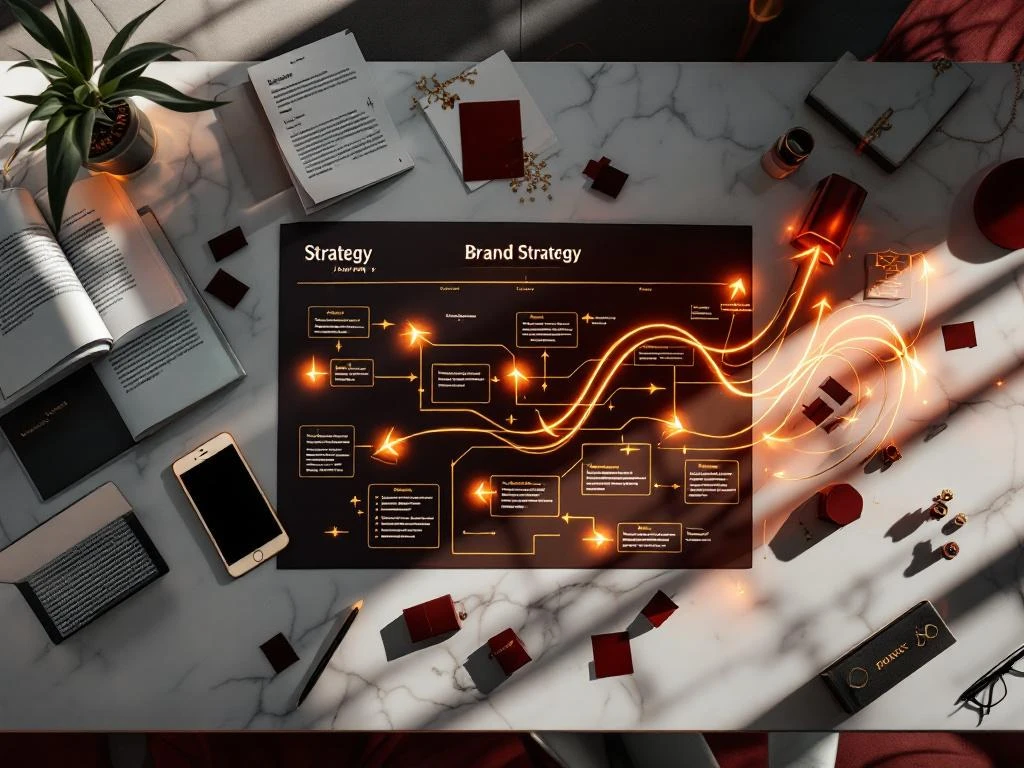
Brand strategy translates into brand experience through systematic implementation across every customer touchpoint. Strategy defines your positioning, values, and personality, while experience brings these elements to life through consistent interactions. This requires mapping customer journeys, aligning internal teams, and maintaining authenticity across all channels. Success depends on creating coherent experiences that reinforce your strategic positioning at every moment of contact.
What’s the difference between brand strategy and brand experience?
Brand strategy is your foundation—the positioning, values, and personality that define who you are. Brand experience is how customers actually encounter and feel your brand through every interaction they have with you.
Think of strategy as your blueprint and experience as the building itself. Your strategy might position you as innovative and customer-focused, but your experience is whether customers actually feel that innovation when they visit your website, speak to your team, or use your product.
The relationship between them is straightforward: strategy informs every decision about experience design. Your positioning shapes how you communicate. Your values determine which touchpoints you prioritise. Your personality influences the tone of every interaction.
Many brands get this backwards. They design experiences first, then try to reverse-engineer a strategy. This creates disconnected touchpoints that confuse rather than convince. Strong brands start with a clear strategy, then systematically translate it into experiences that reinforce their positioning.
The practical difference shows up in consistency. Strategic brands feel coherent whether you encounter them online, in-store, or through customer service. Non-strategic brands feel fragmented because each touchpoint operates independently, without unified direction.
How do you identify the right touchpoints for your brand experience?
Map your customer journey from first awareness to post-purchase advocacy, then identify moments where customers form opinions about your brand. These opinion-forming moments are your priority touchpoints for strategic investment.
Start with the customer perspective, not your internal structure. Customers don’t care about your departmental divisions—they experience your brand as one entity across all interactions. Walk through their journey chronologically and note every point of contact.
Focus on moments of truth—touchpoints where customers decide whether you deliver on your brand promise. For a luxury brand, this might be packaging and first impressions. For a service business, it’s often the initial consultation or customer support response.
Prioritise based on impact and feasibility. High-impact touchpoints directly influence purchasing decisions or referrals. High-feasibility touchpoints are within your control and budget to improve immediately.
Consider both digital and physical touchpoints. Your website, social media, and email communications need the same strategic consistency as your physical locations, packaging, and face-to-face interactions. Customers expect coherence across all channels.
Remember that some touchpoints matter more for different audiences. B2B brands might prioritise sales presentations and proposal documents. Consumer brands might focus on packaging and social media presence. Align your touchpoint priorities with your strategic audience focus.
What makes some brand experiences feel authentic while others fall flat?
Authentic brand experiences consistently reflect genuine brand personality and values through every interaction. Inauthentic experiences feel forced because they’re designed for marketing impact rather than genuine customer value.
The difference lies in internal alignment. Authentic brands ensure everyone—from leadership to front-line staff—understands and embodies the brand strategy. When your team genuinely believes in your positioning, it shows in their interactions with customers.
Authentic experiences also match customer expectations with reality. If you position yourself as premium, your experience needs to justify that positioning through quality, attention to detail, and service excellence. Promising premium while delivering standard creates immediate disconnect.
Many brands fall flat because they focus on surface-level design without addressing underlying experience issues. Beautiful packaging can’t compensate for poor customer service. Clever advertising can’t fix a confusing website. Authentic brands align the substance with the style.
Consider your brand personality honestly. If you’re positioned as approachable and friendly, your customer service needs to reflect that warmth. If you’re positioned as expert and authoritative, your content and communications need to demonstrate that expertise.
The most authentic experiences feel effortless to customers while requiring significant strategic coordination behind the scenes. This coordination—ensuring every touchpoint reinforces your positioning—separates authentic brands from those that feel disconnected or opportunistic.
How do you ensure brand consistency across different customer interactions?
Create clear brand guidelines that translate strategy into practical instructions for every team member. These guidelines should cover messaging, visual identity, tone of voice, and decision-making principles that teams can apply across all customer interactions.
Develop a brand framework that goes beyond visual identity. Include messaging hierarchies, value propositions, and personality attributes with specific examples of how they apply in different contexts. This helps teams make brand-consistent decisions even in unexpected situations.
Implement regular training and alignment sessions. Brand consistency requires ongoing reinforcement, not one-time briefings. Teams need to understand not just what to do, but why these choices support your strategic positioning.
Establish approval processes for customer-facing materials. Whether it’s email templates, social media posts, or sales presentations, maintain quality control over materials that directly impact customer experience. This prevents brand drift over time.
Monitor and measure consistency across touchpoints. Regular audits of customer interactions—from website user experience to customer service calls—help identify gaps between strategy and execution. Address inconsistencies quickly before they become customer-facing problems.
Consider rebranding as an opportunity to reset consistency standards. When organisations undergo strategic repositioning, it’s the perfect time to align all touchpoints with refreshed brand strategy and eliminate legacy inconsistencies.
How can King of Hearts help translate your brand strategy into compelling experiences?
We bridge the gap between strategic thinking and practical implementation through our proven three-layer methodology: strategy, creation, and activation. This holistic approach ensures your brand strategy comes alive consistently across every customer touchpoint.
Our Battle Plan methodology translates complex brand positioning into clear, actionable frameworks your teams can implement immediately. We use tools like Brand Key, Value Proposition Canvas, and Brand Pyramid to create practical guidelines that inform decision-making across your organisation.
Working with companies across Europe and internationally, we understand the complexities of maintaining brand consistency across different markets and cultures. Our experience spans technology, luxury goods, retail, and B2B sectors, giving us insight into how brand strategy translates differently across industries.
We don’t just design brand experiences—we help you build the internal capabilities to maintain them. This includes training your teams, establishing approval processes, and creating measurement systems that ensure long-term consistency.
Our approach combines strategic depth with creative excellence. We understand that brilliant strategy without compelling execution fails to move people. Equally, beautiful creative without a strategic foundation fails to build lasting brand value.
If you’re ready to transform your brand strategy into experiences that genuinely connect with customers, let’s discuss how our methodology can work for your organisation. Visit our expertise page to learn more about our approach, or contact us to start the conversation about your brand transformation.
Strong brand experiences don’t happen by accident—they require strategic thinking, systematic implementation, and ongoing commitment to consistency. The brands that successfully translate strategy into compelling experiences are those that invest in both the strategic foundation and the practical systems needed to bring it to life across every customer interaction.
Frequently Asked Questions
How long does it typically take to see results from brand experience improvements?
Most organizations see initial improvements in customer perception within 3-6 months of implementing consistent brand experiences. However, significant business impact—increased loyalty, referrals, and premium pricing—typically develops over 12-18 months as customers experience multiple consistent touchpoints and build trust in your brand promise.
What's the biggest mistake companies make when implementing brand experience changes?
The most common mistake is trying to change everything at once without proper internal alignment. Companies often redesign touchpoints superficially while neglecting the underlying systems, training, and processes needed to maintain consistency. This creates temporary improvements that quickly revert to old patterns, confusing customers and wasting resources.
How do you measure whether your brand experience is actually working?
Track both quantitative metrics (Net Promoter Score, customer retention, conversion rates) and qualitative feedback (customer interviews, touchpoint audits, employee feedback). The key is measuring consistency across touchpoints—customers should describe your brand similarly whether they interact with you online, in-person, or through customer service.
Can small businesses with limited budgets still create compelling brand experiences?
Absolutely. Small businesses often have advantages in creating authentic experiences because they have more direct control over customer interactions. Focus on your highest-impact touchpoints first, ensure your team genuinely understands your brand positioning, and prioritize consistency over expensive design. Personal attention and genuine care often outweigh big budgets in creating memorable experiences.
How do you handle brand experience when working with third-party partners or distributors?
Create comprehensive partner guidelines that clearly communicate your brand standards and provide practical tools for implementation. Include regular training sessions, approval processes for customer-facing materials, and monitoring systems to ensure consistency. Consider partner capability when selecting distribution channels—some partners may not be able to deliver your intended brand experience.
What should you do if your current brand experience doesn't match your intended strategy?
Start with an honest audit of all customer touchpoints to identify specific gaps between strategy and execution. Prioritize the most critical disconnects—those that directly contradict your positioning or confuse customers. Then implement changes systematically, beginning with internal alignment and training before updating external touchpoints. This prevents mixed messages during the transition period.
How do you maintain brand experience consistency across different cultural markets?
Identify your core brand elements that must remain consistent globally (values, personality, key messages) versus elements that can adapt locally (communication style, specific touchpoints, cultural references). Create regional guidelines that maintain strategic alignment while allowing for cultural sensitivity. Regular cross-market collaboration ensures local adaptations don't drift from the overall brand strategy.