


What happens when your brand does not grow with your ambitions?
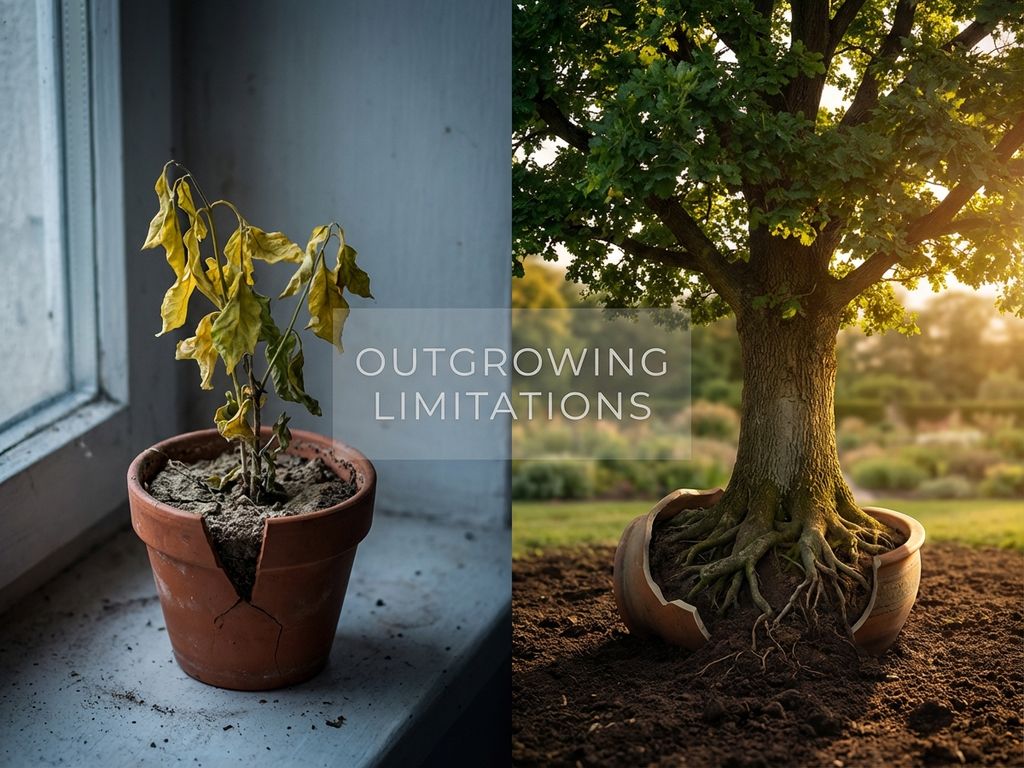
When your brand doesn’t evolve alongside your business growth, you create a dangerous gap between your market position and your capabilities. This misalignment leads to customer confusion, missed opportunities, and competitive disadvantages that can significantly impact your performance. The solution involves strategic brand renewal that updates your positioning, messaging, and visual identity to match your current ambitions while maintaining brand equity.
What are the warning signs that your brand isn’t keeping up with your growth?
The most telling signs include customers struggling to understand your expanded capabilities, inconsistent messaging across departments, and your brand feeling outdated compared to competitors. You’ll notice internal teams describing your services differently, prospects questioning whether you can handle larger projects, and your visual identity looking mismatched with your current market position.
Customer confusion often manifests when prospects associate you with your original offerings rather than your evolved capabilities. If you started as a local service provider but now operate internationally, yet customers still see you as small-scale, your brand hasn’t kept pace. This perception gap directly affects your ability to win premium projects or attract strategic partnerships.
Internal messaging inconsistencies become apparent when different departments describe your value proposition differently. Sales teams might pitch advanced capabilities while marketing materials reflect older positioning. This disconnect confuses prospects and weakens your market credibility.
Market positioning gaps emerge when your brand strategy doesn’t reflect your current competitive landscape. Your messaging might focus on features that were differentiating five years ago but are now standard industry practice. Meanwhile, your actual competitive advantages remain hidden.
Why do successful companies struggle with outdated brand positioning?
Growing businesses often maintain legacy brand strategies because they fear disrupting existing success, lack dedicated resources for strategic brand work, and face internal resistance to change. Leadership teams frequently prioritise operational growth over brand development, viewing branding as secondary to business fundamentals.
Fear of change runs deep in successful organisations. Teams worry that updating their brand positioning might confuse existing customers or dilute hard-earned market recognition. This conservative approach overlooks how brand evolution can actually strengthen customer relationships by demonstrating growth and innovation.
Resource allocation typically favours immediate revenue-generating activities over strategic brand building. Marketing budgets focus on campaigns and lead generation rather than fundamental positioning work. This short-term thinking creates long-term competitive vulnerabilities.
Internal resistance often comes from teams comfortable with established messaging and processes. Sales teams resist learning new positioning frameworks. Marketing departments worry about rebuilding brand awareness. These concerns, whilst understandable, prevent necessary strategic evolution.
How does brand misalignment actually impact your business performance?
Brand misalignment reduces market credibility, decreases customer loyalty, creates internal confusion, and generates missed growth opportunities. Companies lose competitive advantages when their actual capabilities exceed their perceived market position, directly affecting pricing power and client acquisition.
Reduced market credibility becomes evident when prospects question your ability to deliver on larger projects or international assignments. Your outdated positioning signals limited capability, regardless of your actual expertise. This perception directly impacts your ability to compete for premium opportunities.
Decreased customer loyalty occurs when existing clients outgrow your apparent capabilities and seek providers who better match their evolved needs. They might appreciate your service quality but question whether you can support their strategic growth plans.
Internal team confusion affects performance when employees lack clear guidance on your current market position and competitive advantages. Sales teams struggle to articulate your value proposition effectively. Marketing efforts become scattered without a unified brand strategy.
Missed growth opportunities multiply when your brand positioning doesn’t support your business ambitions. International expansion becomes harder when your brand feels locally focused. Premium pricing becomes impossible when your positioning suggests commodity services.
What does it mean to evolve your brand strategy with your ambitions?
Evolving your brand strategy means systematically updating your positioning, messaging, and visual identity to reflect your current capabilities and market ambitions whilst preserving valuable brand equity. This process involves strategic positioning refinement, comprehensive messaging updates, and cultural alignment that supports sustainable growth.
Strategic positioning refinement starts with an honest assessment of your current market position versus your actual capabilities and ambitions. This involves identifying gaps between perception and reality, understanding your evolved competitive advantages, and defining your target position in the marketplace.
Comprehensive messaging updates translate your refined positioning into clear, compelling communication that resonates with your target audience. This includes developing new value proposition frameworks, updating key messages across all touchpoints, and ensuring consistency in how teams describe your capabilities.
Visual identity development ensures your brand appearance matches your strategic positioning. This might involve logo refinement, colour palette updates, typography choices, and imagery styles that reflect your current market position and ambitions.
Cultural alignment processes help internal teams understand and embrace your evolved brand strategy. This includes training programmes, communication frameworks, and behavioural guidelines that ensure consistent brand expression across all interactions.
How do you know when it’s time to refresh your brand approach?
Key timing indicators include significant business growth, market expansion, competitive landscape changes, and internal team struggles with positioning consistency. The optimal moment typically occurs when your business capabilities have evolved substantially but your brand positioning hasn’t kept pace with these developments.
Significant business growth often signals the need for brand renewal. If your revenue, team size, or service capabilities have doubled whilst your brand positioning remains static, you’ve likely created a perception gap that affects market performance.
Market expansion triggers brand review necessity. Geographic expansion, new service lines, or target audience evolution all require positioning assessment. Your brand strategy should support rather than constrain your growth ambitions.
Competitive landscape changes demand a strategic response. New competitors, industry consolidation, or technological disruption might have shifted your relative market position. Your brand positioning should reflect your current competitive advantages.
Internal positioning struggles become apparent when teams can’t clearly articulate your competitive advantages or struggle to explain your capabilities to prospects. This confusion often indicates that your brand strategy no longer matches your business reality.
How King Of Hearts helps strengthen your brand positioning
We help organisations bridge the gap between their current capabilities and market perception through our proven Battle Plan methodology. Our strategic approach combines comprehensive brand assessment, positioning refinement, and implementation frameworks that align your brand with your business ambitions.
Our company positioning process includes:
- Strategic brand audit identifying perception gaps and competitive positioning opportunities
- Brand Key development that crystallises your unique market position and value proposition
- Comprehensive messaging frameworks that translate strategy into compelling communication
- Visual identity evolution that reflects your current market position and ambitions
- Implementation roadmaps ensuring consistent brand expression across all touchpoints
We understand that a successful branding update requires balancing evolution with equity preservation. Our three-layer methodology encompasses strategy, creation, and activation, ensuring your refreshed brand positioning drives measurable business results whilst maintaining valuable market recognition.
Ready to align your brand with your ambitions? Discover our strategic approach or contact us to discuss your brand positioning challenges.
Frequently Asked Questions
How long does a typical brand renewal process take?
A comprehensive brand renewal typically takes 3-6 months, depending on the scope and complexity of your business. This includes 4-6 weeks for strategic assessment and positioning development, 6-8 weeks for messaging and visual identity creation, and 4-8 weeks for implementation planning and rollout preparation.
What's the biggest mistake companies make when updating their brand positioning?
The most common mistake is trying to change everything at once without preserving valuable brand equity. Companies often rebrand completely when they only need strategic positioning refinement. This can confuse existing customers and waste years of market recognition that could be leveraged for growth.
How do we communicate brand changes to existing customers without losing their trust?
Start by emphasising evolution rather than revolution - frame changes as natural growth that better serves their needs. Communicate the 'why' behind changes, showing how your enhanced positioning benefits them directly. Roll out changes gradually and maintain consistent service quality throughout the transition to reinforce stability.
Can we update our brand positioning without changing our visual identity?
Yes, brand positioning and visual identity are separate elements that can be updated independently. Many successful companies refresh their strategic positioning and messaging while keeping recognisable visual elements. However, ensure your visual identity doesn't contradict your new positioning - sometimes subtle refinements are needed for alignment.
How do we measure the success of our brand positioning update?
Track both perception and performance metrics. Monitor brand awareness surveys, customer feedback on positioning clarity, and sales team confidence in articulating your value proposition. Measure business impact through lead quality improvements, average project size increases, pricing power enhancement, and competitive win rates in your target market segments.
What if our team resists the new brand positioning internally?
Internal resistance is normal and manageable with proper change management. Involve key stakeholders in the development process, clearly communicate the business rationale, and provide comprehensive training on new messaging frameworks. Create early wins by showing how the updated positioning helps teams achieve their goals more effectively.
Should we hire an external agency or handle brand renewal internally?
External expertise brings objectivity, strategic experience, and specialised skills that internal teams often lack. Agencies can identify blind spots, benchmark against industry best practices, and provide frameworks you might not develop internally. However, internal teams must remain deeply involved to ensure cultural alignment and successful implementation.