


What is the difference between surviving and growing as a brand?
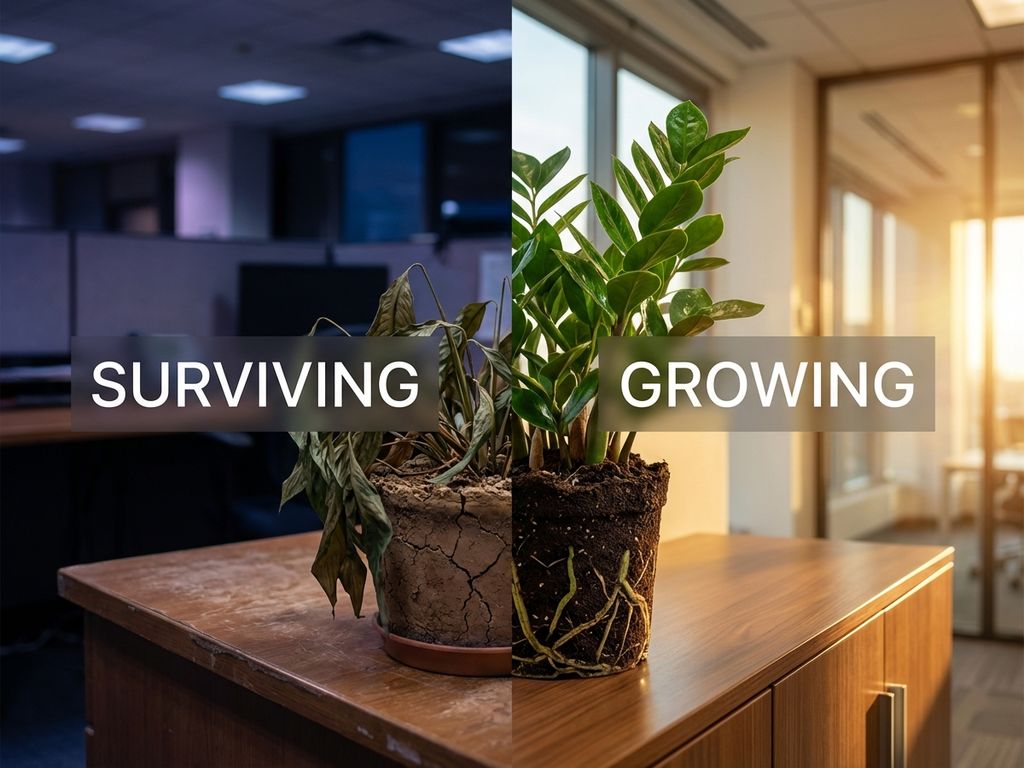
The difference between surviving and growing as a brand comes down to mindset and approach. Surviving brands react to problems and focus on short-term fixes, while growing brands proactively build strategic positioning and invest in long-term brand building. Surviving means maintaining your current position through defensive tactics, whereas growing means expanding your market presence through deliberate brand strategy and value proposition development.
What does it mean for a brand to be in survival mode?
Brand survival mode means operating reactively, focusing on immediate problems rather than strategic growth. Brands in survival mode typically cut marketing budgets, reduce brand-building activities, and concentrate solely on maintaining current customers without investing in future positioning.
Surviving brands exhibit several telling characteristics. They respond to competitive threats rather than creating their own market advantages. Their decision-making revolves around cost reduction instead of value creation. Marketing efforts become purely tactical—promoting discounts, fighting price wars, or copying competitors’ moves without considering long-term brand impact.
You’ll recognise survival mode through specific behaviours. Leadership discussions centre on cutting costs rather than building competitive advantages. Brand strategy takes a back seat to operational concerns. The company reacts to market changes instead of anticipating them. Innovation stalls because resources focus on protecting existing business rather than developing new opportunities.
The mindset difference is fundamental. Survival thinking asks, “How do we maintain what we have?” while growth thinking asks, “How do we build something stronger?” This shift affects every decision, from budget allocation to team priorities.
How do you know if your brand is growing or just surviving?
Growing brands invest consistently in brand building, develop clear positioning strategies, and make proactive market moves. Surviving brands react to external pressures, cut brand investments during challenges, and focus primarily on defending their current market position rather than expanding it.
Look at your budget allocation patterns. Growing brands maintain or increase brand-building investments even during difficult periods. They understand that brand strategy drives long-term value. Surviving brands treat marketing as an expense to cut when pressure mounts, not as an investment in future growth.
Examine your competitive behaviour. Growing brands set industry standards and force competitors to respond to their moves. They launch new initiatives, enter new markets, or introduce innovative positioning. Surviving brands follow industry trends, match competitors’ pricing, and rarely lead market conversations.
Consider your internal conversations. Growth-oriented teams discuss market opportunities, brand positioning improvements, and strategic expansion. Survival-focused teams talk about cost reduction, defensive tactics, and maintaining current performance levels. The language reveals the mindset.
Assess your value proposition development. Growing brands continuously refine and strengthen their positioning. They invest in understanding customer needs and building distinctive brand experiences. Surviving brands rely on existing propositions without strategic enhancement or market positioning updates.
What are the biggest risks of staying in brand survival mode?
Staying in survival mode creates a downward spiral where reduced brand investment weakens market position, leading to further defensive actions. This reactive approach erodes competitive advantage, reduces pricing power, and ultimately threatens long-term business viability through weakened brand equity.
The most significant risk is competitive displacement. While you focus on cost-cutting and defensive moves, growth-oriented competitors invest in brand building and market expansion. They capture mindshare, attract top talent, and build stronger customer relationships. Your market position weakens as theirs strengthens.
Financial implications compound over time. Survival mode often means competing primarily on price, which erodes margins and reduces the resources available for brand investment. This creates a cycle where weakened positioning forces more price competition, further reducing profitability and strategic options.
Team morale and organisational culture suffer significantly. Survival mode creates uncertainty, reduces innovation, and focuses energy on maintaining the status quo rather than building something meaningful. Top performers leave for companies with clearer growth visions and stronger market positions.
Perhaps most dangerous is the opportunity cost. Markets evolve constantly, and survival mode prevents you from capitalising on changes. While you maintain existing operations, growth-focused competitors establish stronger positions in emerging opportunities. Recovery becomes increasingly difficult as gaps widen.
How do you shift from brand survival to sustainable growth?
Shifting from survival to growth requires committing to strategic brand investment even during challenging periods. Start by developing clear company positioning that differentiates your brand, then allocate consistent resources to brand-building activities that support long-term market strength rather than short-term fixes.
Begin with strategic foundation work. Develop or refine your brand positioning to create distinctive market advantage. This means understanding your unique value in the marketplace and communicating it consistently. Without clear positioning, growth efforts lack direction and impact.
Restructure your budget priorities. Allocate specific percentages to brand-building activities that remain protected during difficult periods. Treat brand investment as infrastructure spending, not discretionary marketing. This consistency builds cumulative advantage over time.
Change your decision-making criteria. Evaluate opportunities based on their brand-building potential, not just their immediate revenue impact. Ask whether initiatives strengthen your market position and competitive advantage. This longer-term perspective guides better strategic choices.
Implement systematic brand renewal processes. Regular positioning reviews, customer insight gathering, and competitive analysis ensure your brand strategy remains relevant and powerful. Growing brands continuously evolve their positioning to maintain market leadership.
Focus on building distinctive capabilities rather than copying competitors. Develop unique approaches to customer problems, innovative service delivery, or superior brand experiences. These differentiators become sustainable competitive advantages that support profitable growth.
How King Of Hearts helps strengthen your brand positioning
We specialise in transforming brands from survival mode into sustainable growth through our proven Battle Plan methodology. Our approach addresses the strategic foundation issues that keep brands trapped in reactive cycles, building distinctive positioning that drives long-term competitive advantage.
Our transformation process includes:
- Strategic positioning development using our Brand Key and Brand Pyramid frameworks to create distinctive market advantage
- Value proposition refinement through our Value Proposition Canvas methodology that clarifies your unique customer value
- Brand architecture planning that aligns all touchpoints with your growth strategy
- Implementation roadmaps that protect brand investment priorities during challenging periods
We work with marketing directors and brand leaders who understand that sustainable growth requires a strategic brand foundation, not tactical quick fixes. Our three-layer approach—strategy, creation, and activation—ensures your brand-building efforts create measurable competitive advantage.
Ready to shift from survival to sustainable brand growth? Discover our strategic approach or contact us to discuss how we can strengthen your brand positioning for long-term market success.
Frequently Asked Questions
How long does it typically take to transition from survival mode to sustainable growth?
The transition timeline varies depending on your brand's current position and market conditions, but most brands see initial momentum within 3-6 months of implementing strategic changes. Full transformation to sustainable growth positioning typically takes 12-18 months of consistent brand investment and strategic execution. The key is maintaining commitment to brand-building activities even when immediate results aren't visible.
What's the minimum budget allocation I should protect for brand building during tough times?
Industry best practices suggest protecting at least 60% of your brand-building budget during challenging periods, even if overall marketing spend decreases. This maintains brand momentum and prevents competitive displacement. Consider reallocating from tactical activities to strategic positioning work rather than cutting brand investment entirely. The brands that maintain investment during downturns often emerge stronger when markets recover.
How do I convince leadership to invest in brand building when we're struggling financially?
Present brand investment as risk mitigation rather than additional spending. Show how survival mode creates a downward spiral that threatens long-term viability, while strategic positioning protects market share and pricing power. Use competitor examples of brands that maintained investment and gained market position during difficult periods. Frame brand building as essential infrastructure, not discretionary marketing.
What are the first practical steps to take when shifting from reactive to proactive brand strategy?
Start by conducting a brand positioning audit to identify gaps between your current market position and growth potential. Then establish protected budget lines for brand-building activities that won't be cut during pressure periods. Create decision-making criteria that evaluate initiatives based on brand-building potential, not just immediate revenue. Finally, implement monthly strategic reviews to ensure you're making proactive moves rather than reactive responses.
How do I measure whether my brand-building efforts are actually driving growth versus just survival?
Track leading indicators like brand awareness, consideration rates, and price premium sustainability rather than just sales metrics. Monitor whether competitors are responding to your initiatives (indicating market leadership) or if you're responding to theirs (indicating reactive positioning). Measure team discussions—growth-focused conversations about opportunities versus survival-focused talks about cost reduction indicate your strategic direction.
Can a brand recover from extended periods in survival mode, or does it cause permanent damage?
Brands can recover from survival mode, but extended periods create significant challenges including weakened market position, reduced pricing power, and lost competitive advantages. Recovery requires substantial strategic investment and typically takes longer than the initial decline period. The key is recognizing survival mode early and implementing strategic positioning changes before competitive gaps become insurmountable.
What's the biggest mistake brands make when trying to shift from survival to growth mode?
The most common mistake is treating the shift as a one-time strategic decision rather than an ongoing commitment to different priorities and behaviors. Brands often revert to survival tactics at the first sign of pressure, undermining their growth positioning efforts. Success requires consistent investment in brand building and strategic thinking, even during challenging periods, plus changing internal decision-making criteria permanently.